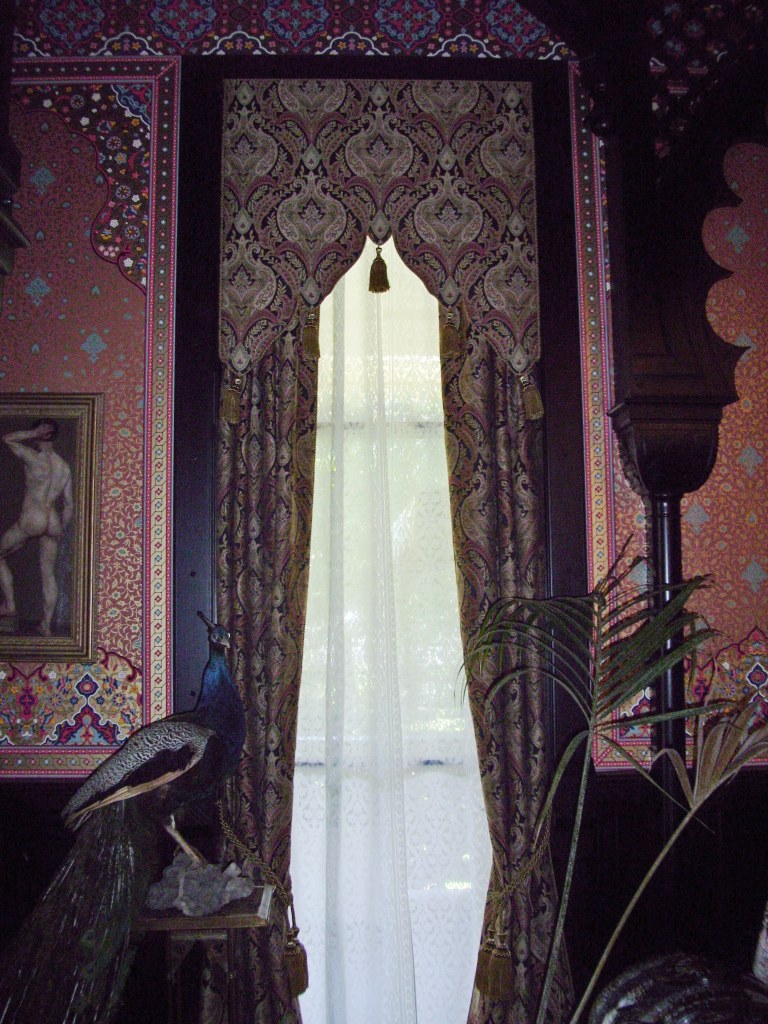
We were extremely flattered when recently, a client and dear friend selected our
Eastlake Panel, designed by Steve Bauer of
Bradbury & Bradbury Wallpapers, to be installed in his Aesthetic Movement apartment at The Osborne in Manhattan. After an intense search, he felt that this pattern was the only one robust enough to accompany his stellar collection of 19th century furnishings.

For those of you unfamiliar with the structure, The Osborne is a fantastic brownstone apartment building situated on the northwest corner of 7th Avenue and West 57th street in Manhattan. Built between 1883 and 1885, in the American Renaissance style, its lobby is renowned as one of New York City's architectural gems. Located diagonally across from Carnegie Hall, it is a favorite of those enchanted with the city's Victorian past.


 Cooper Lace was selected to provide the lace curtains for Mableton in Santa Rosa, California; possibly the finest restoration of a Victorian mansion in recent memory. Overseen by Steve Rynerson and Paul Duchscherer, the window treatments have been executed by the extremely talented Victoria Lenox of Lenox Interior Motifs. She recently shared these photos of our Brownstone lace, designed by Bradbury & Bradbury wallpapers, and hung in a Turkish Revival room. We'll be displaying more of our lace shortly, but wanted to show you this right away!